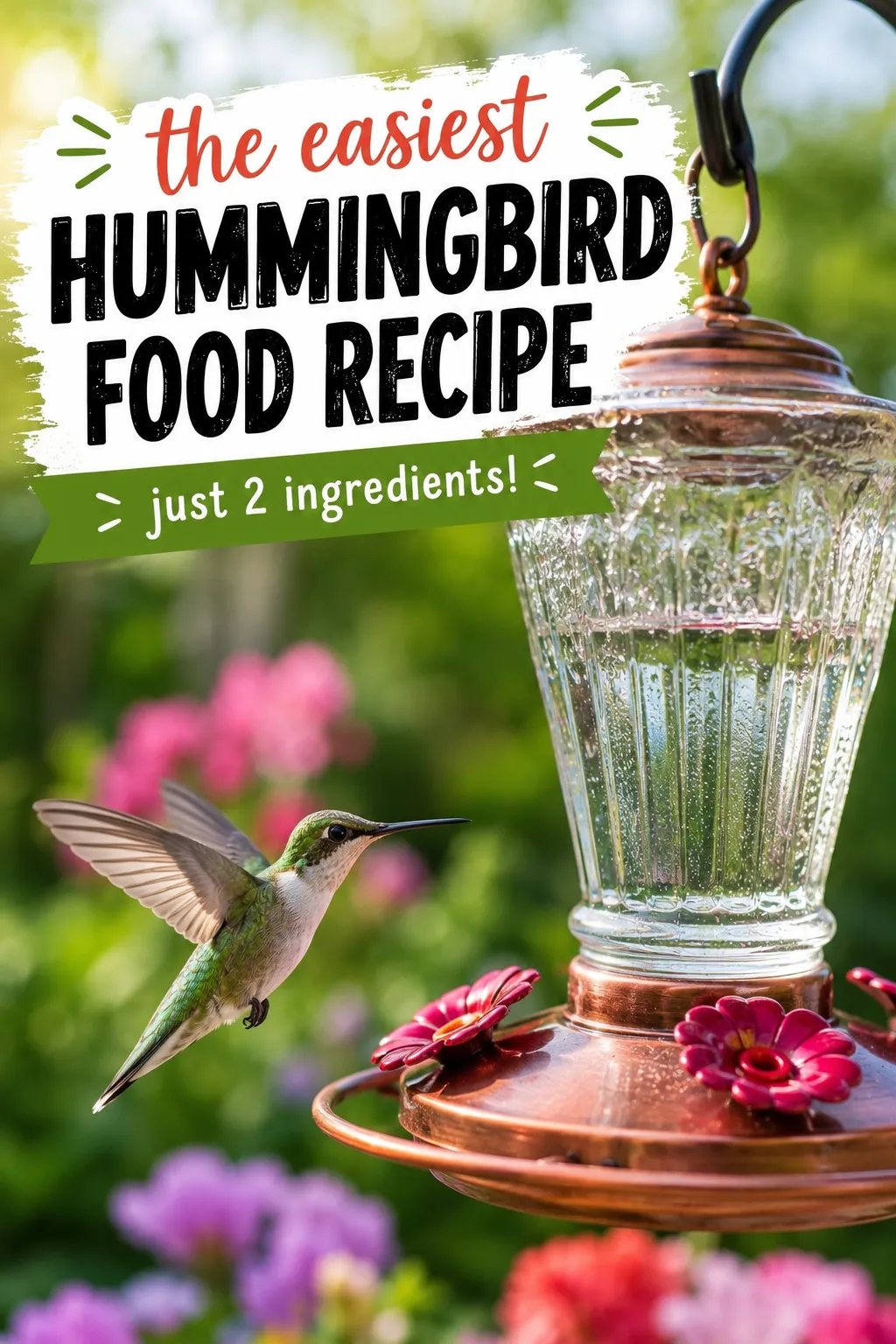
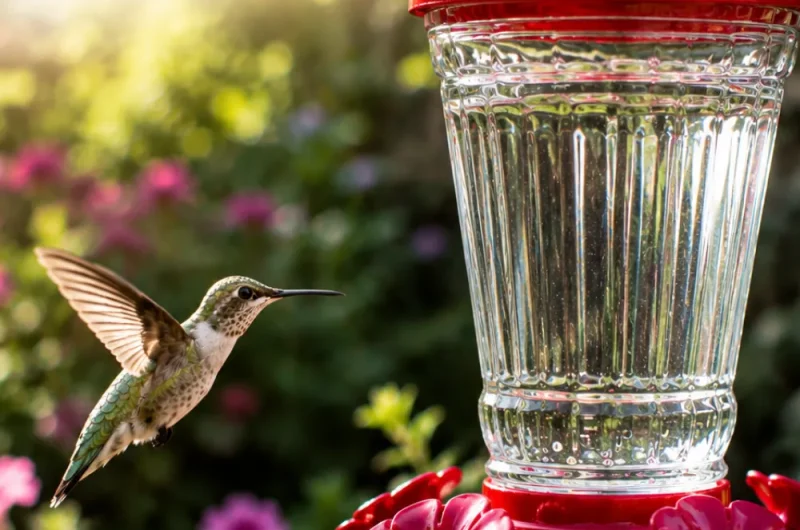
There’s something magical about watching hummingbirds flutter around your garden. Their tiny wings move at lightning speed, their colors shimmer beautifully in the sunlight, and their playful energy instantly makes any outdoor space feel more alive. One of the easiest and most affordable ways to attract these beautiful birds is by making homemade hummingbird food right in your kitchen.
This simple hummingbird nectar recipe uses only two ingredients and takes just minutes to prepare. Unlike many store-bought nectar mixes, this homemade version contains no artificial dyes, preservatives, or unnecessary additives. It’s safe, natural, budget-friendly, and loved by hummingbirds everywhere.
Why You’ll Love This Homemade Hummingbird Food
Simple 2-Ingredient Recipe
All you need is sugar and water. No complicated ingredients or expensive premade mixes required.
Safe and Natural
This homemade nectar closely mimics the natural nectar hummingbirds drink from flowers.
Budget-Friendly
Making hummingbird food at home costs only pennies compared to store-bought options.
Perfect for Backyard Bird Lovers
A fresh feeder filled with homemade nectar can attract hummingbirds quickly and create a peaceful backyard experience.
Better Than Store-Bought Nectar
Many commercial products contain unnecessary red dye. This recipe keeps things clean and natural.
Why This Recipe Is a Must-Try
Homemade hummingbird food is one of the easiest DIY recipes you can make, but it creates such a rewarding experience. Hummingbirds rely on sugary nectar for energy, especially during migration seasons when they travel long distances.
Recipe Information
- Recipe Name: Homemade Hummingbird Food
- Preparation Time: 5 minutes
- Cooking Time: 2 minutes
- Total Time: 7 minutes
- Yield: 4 cups nectar
- Calories: Approximately 50 calories per serving
- Course: DIY Bird Food
- Cuisine: American Backyard Gardening
- Difficulty Level: Easy
Ingredients
- 1 cup white granulated sugar
- 4 cups water
Ingredient Notes
White Granulated Sugar
Regular white sugar is the safest option because it closely resembles natural flower nectar.
Water
Filtered water is recommended for the cleanest nectar, but regular tap water also works.
Important Safety Tips Before You Start
- Never use honey because it can promote dangerous fungal growth.
- Avoid brown sugar, coconut sugar, powdered sugar, or artificial sweeteners.
- Do not add red food coloring.
- Always clean hummingbird feeders regularly to prevent mold and bacteria buildup.
Quick Overview
- Boil water.
- Dissolve sugar completely.
- Cool the nectar.
- Fill the feeder.
- Refrigerate extra nectar.
Step-by-Step Instructions
Step 1: Measure the Ingredients
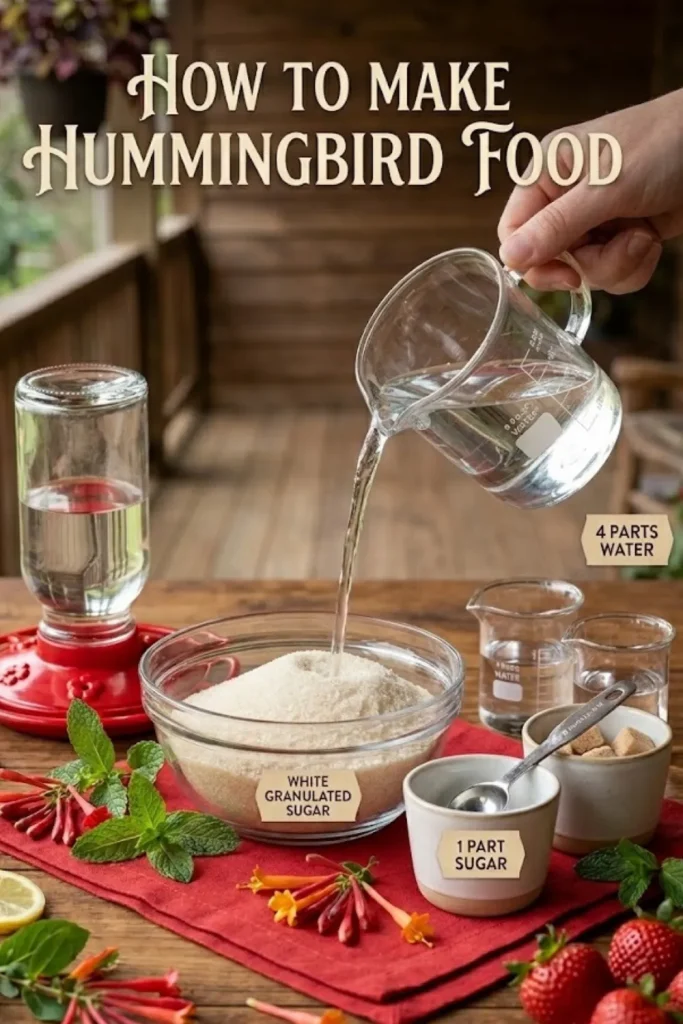
Carefully measure 1 cup of white granulated sugar and 4 cups of water. Maintaining the proper ratio is important because it matches the sweetness level of natural flower nectar.
Step 2: Boil the Water
Pour the water into a medium saucepan and bring it to a gentle boil over medium-high heat. Boiling helps remove impurities and creates a cleaner nectar.
Step 3: Add the Sugar
Remove the saucepan from heat and stir in the sugar. Continue stirring until the sugar completely dissolves and the liquid becomes clear.
Step 4: Cool Completely
Allow the nectar to cool to room temperature before using. Never pour hot nectar into a feeder because it can damage the feeder and may harm birds.
Step 5: Fill the Feeder
Pour the cooled nectar into a clean hummingbird feeder. Hang the feeder outdoors in a shaded or partially shaded area.
Step 6: Store the Extra Nectar
Transfer leftover nectar into an airtight jar or container and refrigerate for later use.
Best Places to Hang a Hummingbird Feeder
- Near flowers and gardens
- Close to trees or shrubs for resting spots
- In partial shade to keep nectar fresh longer
- Near windows where you can enjoy watching hummingbirds safely
How to Serve Hummingbird Food
Unlike traditional recipes, hummingbird nectar is served by filling a hummingbird feeder instead of a plate or bowl.
For best results:
- Use clean feeders only.
- Refill feeders with fresh nectar regularly.
- Place multiple feeders around your yard during busy hummingbird seasons.
Expert Tips for Success
Keep Feeders Clean
Wash feeders every 2–3 days in warm weather to prevent bacteria and mold growth.
Skip the Red Dye
Hummingbirds are naturally attracted to feeder colors and flowers. Artificial coloring is unnecessary.
Change Nectar Frequently
Fresh nectar attracts more hummingbirds and keeps them healthy.
Use the Correct Sugar Ratio
Too much sugar can be harmful, while too little may not provide enough energy.
Place Feeders in Quiet Areas
Hummingbirds prefer calm, safe feeding spaces away from heavy activity.
Easy Variations
Small Batch Version
Use:
- 1/4 cup sugar
- 1 cup water
Perfect for testing a new feeder.
Large Batch Version
Use:
- 2 cups sugar
- 8 cups water
Great during migration season when hummingbirds feed heavily.
Garden-Friendly Setup
Plant nectar-rich flowers nearby such as:
- Bee balm
- Petunias
- Salvia
- Trumpet vine
- Columbine
Storage and Freezing Instructions
Refrigerator Storage
Store extra nectar in an airtight container for up to 1 week.
Freezer Storage
Freeze nectar for up to 1 month. Thaw completely before using.
Outdoor Feeder Timing
- Hot weather: Replace nectar every 2 days
- Mild weather: Replace every 4–5 days
Special Equipment Needed
- Medium saucepan
- Measuring cups
- Stirring spoon
- Airtight storage container
- Hummingbird feeder
Frequently Asked Questions
Can I use organic sugar?
Yes, as long as it is plain white granulated sugar without added molasses.
Why shouldn’t I use honey?
Honey can encourage fungal growth that may be dangerous for hummingbirds.
Do hummingbirds need red dye in nectar?
No. Red dye is unnecessary and may be harmful.
How long does homemade hummingbird nectar last?
It stays fresh in the refrigerator for about one week.
Why are ants getting into my feeder?
Use feeders with built-in ant moats or hang feeders away from surfaces ants can climb.
What time of year should I put out feeders?
Spring and summer are the best seasons, especially during migration periods.
Common Mistakes to Avoid
- Using the wrong sugar ratio
- Adding food coloring
- Leaving nectar out too long
- Not cleaning feeders often enough
- Using spoiled nectar
Final Thoughts
Making homemade hummingbird food is one of the simplest and most rewarding ways to attract beautiful birds to your yard naturally. With only sugar and water, you can create a safe nectar that supports hummingbirds while giving yourself the joy of watching these amazing little creatures up close.

How to Make Hummingbird Food

Ingredients
- 1 cup white granulated sugar
- 4 cups water
Instructions
- Measure the Ingredients Carefully measure 1 cup of white granulated sugar and 4 cups of water. Maintaining the proper ratio is important because it matches the sweetness level of natural flower nectar.
- Boil the Water Pour the water into a medium saucepan and bring it to a gentle boil over medium-high heat. Boiling helps remove impurities and creates a cleaner nectar.
- Add the Sugar Remove the saucepan from heat and stir in the sugar. Continue stirring until the sugar completely dissolves and the liquid becomes clear.
- Cool Completely Allow the nectar to cool to room temperature before using. Never pour hot nectar into a feeder because it can damage the feeder and may harm birds.
- Fill the Feeder Pour the cooled nectar into a clean hummingbird feeder. Hang the feeder outdoors in a shaded or partially shaded area.
- Store the Extra Nectar Transfer leftover nectar into an airtight jar or container and refrigerate for later use.