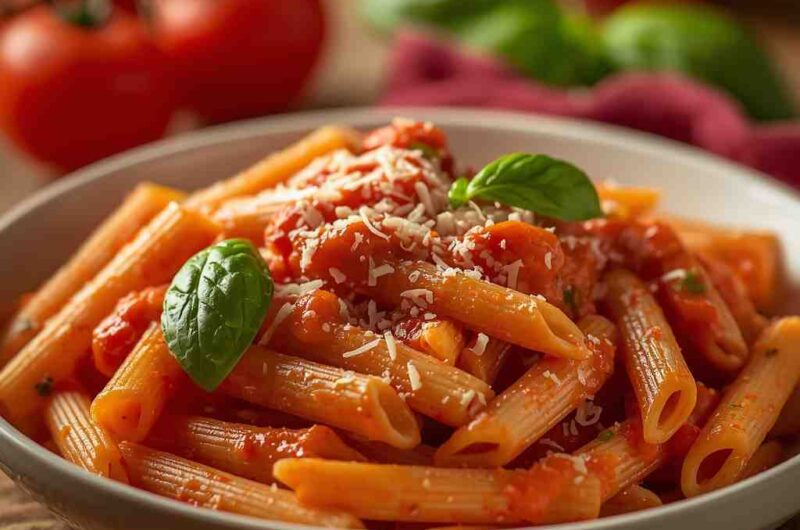
Penne Pomodoro is one of the most cherished dishes in Italian cuisine — a simple yet vibrant pasta tossed in a light, fresh tomato sauce infused with garlic, olive oil, and aromatic basil. The word pomodoro literally means “golden apple” in Italian, referring to the tomato, which shines as the star of this dish. Unlike heavy, cream-based pastas, Penne Pomodoro focuses on purity of flavor.
The sauce is made from ripe tomatoes, cooked gently to preserve their natural sweetness and tang, and finished with fragrant basil for that unmistakable Italian freshness. It’s a dish that feels light yet deeply satisfying — an ode to the Italian saying: “La semplicità è la forma più alta di perfezione” — “Simplicity is the highest form of perfection.”
Why I Love This Recipe
I love Penne Pomodoro because it captures the soul of Italian home cooking — simple ingredients, treated with care, resulting in something extraordinary.
The aroma of garlic sizzling in olive oil, the sweet acidity of tomatoes simmering to a silky sauce, and the finishing touch of basil create a perfect harmony.
Why It’s a Must-Try Dish
This dish is a must-try because it’s the foundation of Italian cuisine. Mastering Penne Pomodoro teaches you the essence of cooking with balance — how acidity, sweetness, fat, and herbs come together naturally.
It’s vegetarian-friendly, wholesome, and can be elevated or simplified depending on your mood. Whether you’re new to Italian cooking or a pasta enthusiast, this recipe is a timeless classic that deserves a place in your repertoire.
Preparation and Cooking Time
- Preparation Time: 10 minutes
- Cooking Time: 25 minutes
- Total Time: 35 minutes
- Servings: 4
- Calories: Approximately 420 kcal per serving
Cuisine and Course
- Cuisine: Italian
- Course: Main Course / Lunch / Dinner
Ingredients
For the Pasta:
- 12 oz (340 g) penne pasta
- Salt, for boiling water
For the Pomodoro Sauce:
- 2 tbsp extra virgin olive oil
- 3 cloves garlic, minced
- 1 small onion, finely chopped (optional, for sweetness)
- 1 ½ lbs (700 g) ripe tomatoes, chopped (or 1 can – 14 oz crushed tomatoes)
- 1 tbsp tomato paste (optional, for richness)
- Salt and pepper, to taste
- 1 tsp sugar (optional, to balance acidity)
- 1/2 tsp red chili flakes (optional)
- 1/4 cup (60 ml) reserved pasta water
- 6–8 fresh basil leaves, torn or chopped
For Garnish:
- Fresh basil leaves
- Freshly grated Parmesan cheese (optional)
- A drizzle of extra virgin olive oil
Simple Cooking Directions
- Cook penne pasta until al dente.
- Sauté garlic (and onion) in olive oil.
- Add tomatoes and simmer into a smooth sauce.
- Toss cooked pasta with the sauce and fresh basil.
- Serve hot with Parmesan and olive oil.
Step-by-Step Preparation Method
Step 1: Cook the Pasta
- Bring a large pot of salted water to a boil.
- Add penne pasta and cook according to package directions until al dente.
- Reserve about ½ cup of pasta water before draining.
Step 2: Sauté Aromatics
- In a large skillet, heat olive oil over medium heat.
- Add minced garlic (and onion, if using) and sauté for 1–2 minutes until fragrant and translucent — not browned.
Step 3: Add Tomatoes and Simmer
- Stir in chopped fresh tomatoes (or canned crushed tomatoes).
- Add tomato paste (if using) and season with salt, pepper, and a pinch of sugar to balance acidity.
- Simmer uncovered for 15–20 minutes, stirring occasionally, until the sauce thickens and the tomatoes break down.
Step 4: Add Pasta and Basil
- Add the cooked penne directly into the skillet with the sauce.
- Toss gently to coat the pasta evenly, adding a splash of reserved pasta water if the sauce is too thick.
- Stir in fresh basil leaves and let the flavors meld for 1–2 minutes.
Step 5: Serve
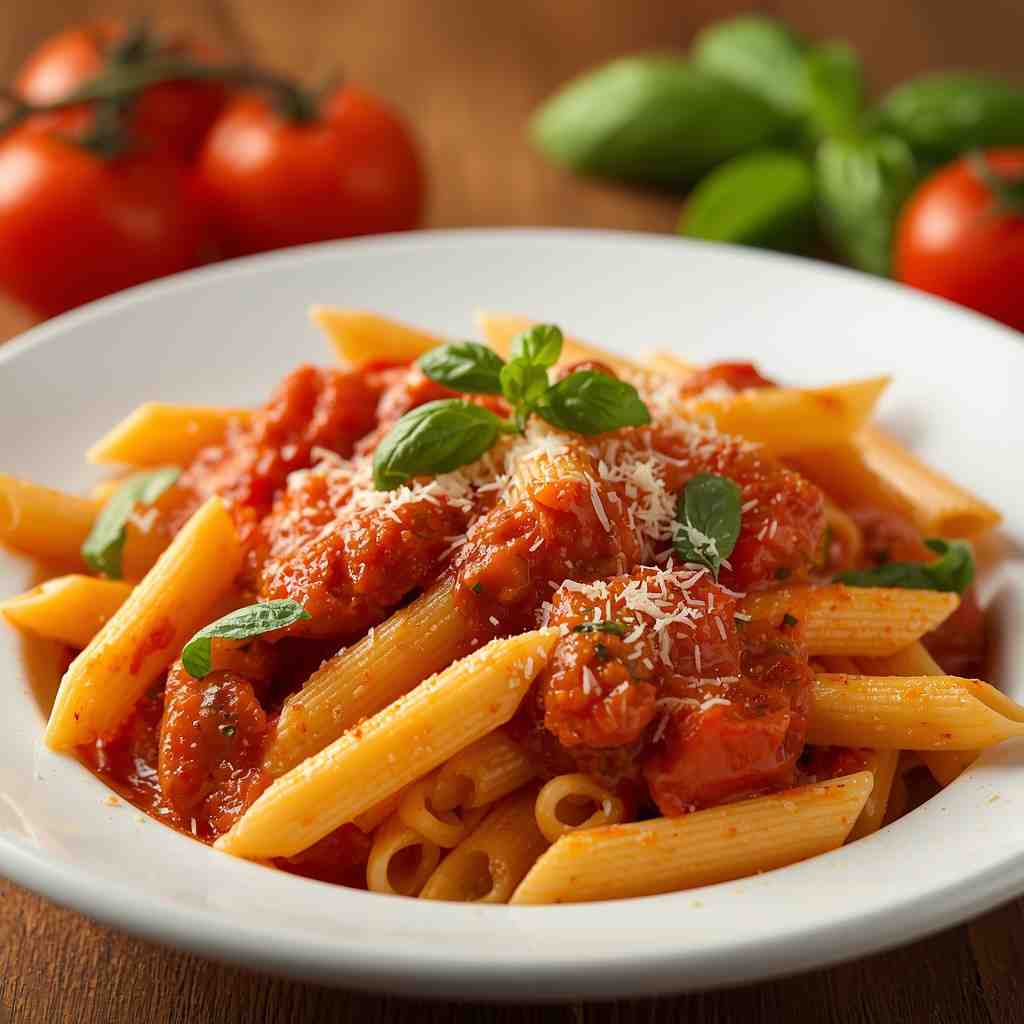
- Transfer to serving plates, drizzle with olive oil, and top with extra basil or grated Parmesan (optional).
How to Serve
Serve Penne Pomodoro warm in shallow bowls for a rustic Italian feel.
Perfect pairings:
- Garlic bread or focaccia
- A crisp green salad with balsamic dressing
- A glass of Chianti or Pinot Grigio
Additional Recipe Tips
- Use ripe tomatoes: The better the tomatoes, the better the sauce. In winter, canned San Marzano tomatoes are ideal.
- Balance acidity: A pinch of sugar or butter can help mellow out sharp tomato flavors.
- Don’t overcook pasta: Keep it al dente to soak up sauce perfectly.
- Infuse flavor: Let the garlic and basil release their aroma gently — don’t rush the sauté.
- Add richness: Stir in a knob of butter at the end for a glossy, velvety sauce.
Variations
- Penne Pomodoro e Mozzarella: Add cubes of fresh mozzarella before serving for a cheesy twist.
- Penne Pomodoro con Pollo: Stir in grilled chicken or roasted vegetables for a protein boost.
- Spicy Pomodoro: Increase red chili flakes or add a pinch of cayenne for heat.
- Creamy Pomodoro: Stir in 2 tbsp of heavy cream for a luxurious pink sauce.
- Pomodoro Marinara Style: Add oregano and capers for a tangier, coastal Italian flavor.
Freezing and Storage
- Refrigerator: Store leftovers in an airtight container for up to 3 days.
- Freezer: The tomato sauce can be frozen (without pasta) for up to 2 months.
- Reheating: Reheat gently in a skillet with a splash of water or olive oil to refresh the texture.
Special Equipment Needed
- Large pot (for boiling pasta)
- Large skillet or sauté pan
- Wooden spoon or silicone spatula
- Sharp knife and cutting board
- Colander
FAQ
Q1: Can I use canned tomatoes?
Yes! High-quality canned San Marzano tomatoes work beautifully when fresh ones aren’t in season.
Q2: Can I make the sauce ahead of time?
Absolutely — the sauce can be made 1–2 days ahead and refrigerated.
Q3: What pasta works best?
Penne is ideal for trapping sauce, but spaghetti, rigatoni, or fusilli also pair well.
Q4: Can I skip the onion?
Yes. Traditional Pomodoro often omits onion for a cleaner garlic-tomato flavor.
Q5: Is it vegan?
Yes, if you skip Parmesan or use a vegan alternative.
Conclusion
Penne Pomodoro with Fresh Tomato and Basil is a timeless Italian classic that proves you don’t need elaborate ingredients to create something extraordinary. With its light yet flavorful sauce, aromatic basil, and perfect balance of sweet and savory, it’s a dish that feels both comforting and elegant.
Every bite tastes like summer in Italy — simple, fresh, and full of soul. Whether you’re new to Italian cooking or a seasoned pasta lover, this recipe is one you’ll return to again and again.
Penne Pomodoro with Fresh Tomato and Basil
Course: PastaCuisine: ItalianDifficulty: Easy4
servings10
minutes25
minutes35
minutesIngredients
For the Pasta:
12 oz (340 g) penne pasta
Salt, for boiling water
For the Pomodoro Sauce:
2 tbsp extra virgin olive oil
3 cloves garlic, minced
1 small onion, finely chopped (optional, for sweetness)
1 ½ lbs (700 g) ripe tomatoes, chopped (or 1 can – 14 oz crushed tomatoes)
1 tbsp tomato paste (optional, for richness)
Salt and pepper, to taste
1 tsp sugar (optional, to balance acidity)
1/2 tsp red chili flakes (optional)
1/4 cup (60 ml) reserved pasta water
6–8 fresh basil leaves, torn or chopped
For Garnish:
Fresh basil leaves
Freshly grated Parmesan cheese (optional)
A drizzle of extra virgin olive oil
Directions
- Step 1: Cook the Pasta : Bring a large pot of salted water to a boil. Add penne pasta and cook according to package directions until al dente. Reserve about ½ cup of pasta water before draining.
- Step 2: Sauté Aromatics : In a large skillet, heat olive oil over medium heat. Add minced garlic (and onion, if using) and sauté for 1–2 minutes until fragrant and translucent — not browned.
- Step 3: Add Tomatoes and Simmer : Stir in chopped fresh tomatoes (or canned crushed tomatoes). Add tomato paste (if using) and season with salt, pepper, and a pinch of sugar to balance acidity. Simmer uncovered for 15–20 minutes, stirring occasionally, until the sauce thickens and the tomatoes break down.
- Step 4: Add Pasta and Basil : Add the cooked penne directly into the skillet with the sauce. Toss gently to coat the pasta evenly, adding a splash of reserved pasta water if the sauce is too thick. Stir in fresh basil leaves and let the flavors meld for 1–2 minutes.
- Step 5: Serve : Transfer to serving plates, drizzle with olive oil, and top with extra basil or grated Parmesan (optional).