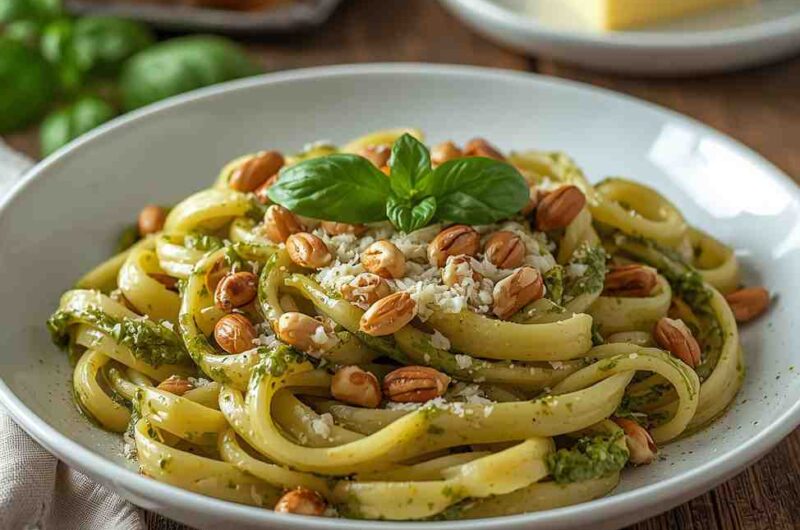
Pesto Genovese is a traditional Italian pasta dish that hails from Genoa, the capital of the Liguria region in northern Italy. The name comes from the Italian word “pestare,” meaning “to crush,” as the sauce is made by crushing fresh basil leaves, pine nuts, garlic, Parmesan, and olive oil into a vibrant green paste.
This simple yet deeply aromatic sauce is one of Italy’s most iconic creations—fragrant, nutty, garlicky, and bursting with freshness. When tossed with perfectly cooked pasta—typically trofie, trenette, or spaghetti—Pesto Genovese becomes a celebration of Mediterranean flavors.
Why I Love This Recipe
I love Pesto Genovese Pasta because it’s the definition of fresh, homemade goodness. The moment the basil hits the mortar (or blender), your kitchen fills with the intoxicating aroma of summer.
The combination of toasted pine nuts, sharp Parmesan, and fruity olive oil creates a creamy sauce that clings beautifully to each strand of pasta.
Why It’s a Must-Try Dish
You must try Pesto Genovese Pasta because:
- It’s authentic Italian comfort food made with fresh, wholesome ingredients.
- It requires no cooking for the sauce, making it quick and healthy.
- It delivers a burst of flavor from just a handful of ingredients.
- It’s perfect for all seasons—refreshing in summer and satisfying year-round.
It’s not just a pasta—it’s a culinary experience that showcases the best of simplicity and tradition.
Preparation and Cooking Details
Preparation Time: 10 minutes
- Cooking Time: 15 minutes
- Total Time: 25 minutes
- Servings: 4
- Calories: Approximately 520 kcal per serving
Cuisine and Course
- Cuisine: Italian (Ligurian)
- Course: Main Course / Pasta
Ingredents
For the Pesto Sauce:
- 2 cups (50 g) fresh basil leaves, tightly packed
- ⅓ cup (40 g) pine nuts (lightly toasted)
- ½ cup (50 g) freshly grated Parmesan cheese (Parmigiano-Reggiano)
- ¼ cup (25 g) grated Pecorino Romano cheese (optional for extra tang)
- 2 cloves garlic
- ½ cup (120 ml) extra virgin olive oil
- Salt, to taste
- Freshly ground black pepper, to taste
For the Pasta:
- 12 oz (340 g) linguine, spaghetti, or trofie pasta
- Salt (for boiling water)
- 2 tbsp reserved pasta water
Simple Cooking Directions
- Boil pasta until al dente.
- While pasta cooks, blend all pesto ingredients into a smooth sauce.
- Toss cooked pasta with pesto and reserved pasta water.
- Serve immediately with extra cheese and basil.
Step-by-Step Preparation Method
Step 1: Toast the Pine Nuts
- In a small pan over medium heat, toast pine nuts for 2–3 minutes until lightly golden and fragrant. Set aside to cool.
Step 2: Make the Pesto
- In a mortar and pestle or food processor, combine basil, pine nuts, garlic, and a pinch of salt.
- Crush or pulse until finely blended.
- Add the cheeses (Parmesan and Pecorino), then gradually drizzle in olive oil while blending until smooth and creamy.
- Adjust seasoning with salt and pepper to taste.
Step 3: Cook the Pasta
- Bring a large pot of salted water to a boil.
- Add pasta and cook until al dente (according to package instructions).
- Reserve about ½ cup of pasta water, then drain.
Step 4: Combine Pasta and Pesto
- In a large bowl or pan (off the heat), add cooked pasta and spoon in the pesto sauce.
- Toss gently, adding a few tablespoons of reserved pasta water until the sauce evenly coats the pasta with a silky texture.
Step 5: Serve
- Plate the pasta, sprinkle extra Parmesan cheese, and garnish with a few basil leaves.
- Drizzle a touch of extra virgin olive oil on top for a glossy finish.

How to Serve
Serve Pesto Genovese Pasta immediately while warm. It pairs beautifully with:
- A crisp white wine like Vermentino or Sauvignon Blanc
- A side of Caprese salad or grilled vegetables
- Warm garlic bread or focaccia for a complete Italian meal
For presentation, use shallow bowls and top with shaved Parmesan and a basil sprig for a touch of elegance.
Additional Recipe Tips
- Use young, fresh basil: Older leaves can taste bitter.
- Do not over-blend: Heat from the blender can darken the pesto—pulse gently or use a mortar and pestle for best flavor.
- Add olive oil slowly: This ensures a creamy, emulsified sauce.
- Salt the pasta water generously: It enhances flavor and balances the pesto’s richness.
- Avoid heating pesto directly: It can turn dark and lose its bright, fresh flavor.
Recipe Variations
- Walnut Pesto: Replace pine nuts with walnuts for a richer, earthier taste.
- Vegan Pesto: Omit cheese and add 1–2 tbsp nutritional yeast for cheesy flavor.
- Sun-Dried Tomato Pesto (Pesto Rosso): Add sun-dried tomatoes for a sweet, tangy twist.
- Arugula or Spinach Pesto: Substitute half of the basil for greens for a peppery or mild variation.
- Lemon Pesto: Add lemon zest or juice for brightness and freshness.
Freezing and Storage
- Refrigeration: Store leftover pesto in an airtight container, covered with a thin layer of olive oil, for up to 5 days.
- Freezing: Freeze pesto (without cheese) in ice cube trays for up to 3 months. Add cheese after thawing for best texture.
- Reheating: Do not heat directly; simply toss with hot pasta to warm it naturally.
Special Equipment Needed
- Food processor or mortar and pestle
- Large pot for boiling pasta
- Fine grater (for cheese)
- Wooden spoon or spatula for mixing
FAQ
Q1: Can I use store-bought pesto?
Yes, but homemade pesto has a fresher, more vibrant flavor. Store-bought versions may contain preservatives or excess oil.
Q2: Why did my pesto turn brown?
Exposure to air and heat causes basil to oxidize. Add olive oil immediately after blending and avoid overheating.
Q3: Can I make pesto without pine nuts?
Absolutely! Substitute with almonds, cashews, or walnuts for a budget-friendly alternative.
Q4: What pasta works best with pesto?
Traditional choices include trofie, trenette, or linguine, as they hold the sauce beautifully.
Q5: Can I add protein to make it a complete meal?
Yes—top with grilled chicken, shrimp, or even roasted vegetables for a heartier version.
Conclusion
Pesto Genovese Pasta with Basil and Pine Nuts is the embodiment of Italian culinary philosophy: fresh ingredients, simple preparation, and extraordinary flavor. The aroma of basil, the nuttiness of pine nuts, and the creaminess of Parmesan combine into a sauce that’s as comforting as it is refreshing.
It’s a must-try dish for anyone who loves Italian cuisine or wants to experience how something so simple can taste so refined. Whether made for a weekday dinner or a special gathering, this pasta brings the vibrant spirit of Genoa straight to your table.
Pesto Genovese Pasta with Basil and Pine Nuts
Course: PastaCuisine: ItalianDifficulty: Easy4
servings10
minutes15
minutes25
minutesIngredients
For the Pesto Sauce:
2 cups (50 g) fresh basil leaves, tightly packed
⅓ cup (40 g) pine nuts (lightly toasted)
½ cup (50 g) freshly grated Parmesan cheese (Parmigiano-Reggiano)
¼ cup (25 g) grated Pecorino Romano cheese (optional for extra tang)
2 cloves garlic
½ cup (120 ml) extra virgin olive oil
Salt, to taste
Freshly ground black pepper, to taste
For the Pasta:
12 oz (340 g) linguine, spaghetti, or trofie pasta
Salt (for boiling water)
2 tbsp reserved pasta water
Directions
- Step 1: Toast the Pine Nuts : In a small pan over medium heat, toast pine nuts for 2–3 minutes until lightly golden and fragrant. Set aside to cool.
- Step 2: Make the Pesto : In a mortar and pestle or food processor, combine basil, pine nuts, garlic, and a pinch of salt. Crush or pulse until finely blended. Add the cheeses (Parmesan and Pecorino), then gradually drizzle in olive oil while blending until smooth and creamy. Adjust seasoning with salt and pepper to taste.
- Step 3: Cook the Pasta : Bring a large pot of salted water to a boil. Add pasta and cook until al dente (according to package instructions). Reserve about ½ cup of pasta water, then drain.
- Step 4: Combine Pasta and Pesto : In a large bowl or pan (off the heat), add cooked pasta and spoon in the pesto sauce. Toss gently, adding a few tablespoons of reserved pasta water until the sauce evenly coats the pasta with a silky texture.
- Step 5: Serve : Plate the pasta, sprinkle extra Parmesan cheese, and garnish with a few basil leaves. Drizzle a touch of extra virgin olive oil on top for a glossy finish.